ANR JCJC DACLOS
Diffuse Acoustic Wave Correlation for Layer-On-Substrate Structures
The ANR JCJC DACLOS project investigates diffuse acoustic wave correlations and passive imaging approaches for complex Layer-on-Substrate (LOS) structures encountered in microelectronics and advanced materials.
The project focuses on the propagation of high-frequency diffuse Rayleigh wavefields and their interaction with defects such as delaminations, adhesion losses, cracks, and thickness inhomogeneities in thin-film and wafer structures.
DACLOS explores innovative methodologies combining diffuse wave correlation, guided ultrasonic waves, reverberant wavefields, signal processing, and passive Green’s function retrieval for nondestructive evaluation and structural health monitoring.
Funding
Agence Nationale de la Recherche (ANR)
JCJC Young Researcher Project
Project reference: ANR-21-CE42-0002
Duration: March 2022 – August 2025
ANR funding: 172 400 €
Coordination
- Lynda Chehami – Principal Investigator
Main Research Topics
- Diffuse wave correlation
- Passive Green’s function retrieval
- Guided ultrasonic waves
- High-frequency Rayleigh waves
- Thin-film and wafer characterization
- Structural health monitoring
- Nondestructive evaluation (NDT/NDE)
Wave Correlation Principle
In a diffuse or reverberant elastic wavefield, the cross-correlation between signals recorded at two receivers can be used to retrieve the Green’s function between these two points. This principle is at the core of passive imaging approaches developed in DACLOS.
Official ANR project: ANR-21-CE42-0002 – DACLOS
Diffuse Wave Correlation
Passive imaging approach based on the cross-correlation of reverberated wavefields recorded at different receiver positions. In diffuse media, the correlation function converges toward the Green's function of the structure, enabling passive characterization and imaging.
Interreg 2 Seas – SOCORRO
Seeking Out Corrosion, before it is too late
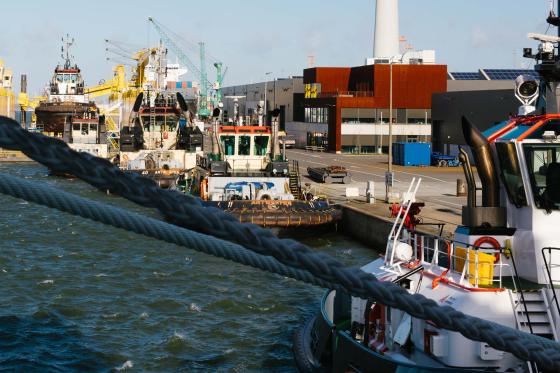
The SOCORRO project was an Interreg 2 Seas European project dedicated to corrosion-risk assessment in marine and industrial infrastructures where water meets steel.
The project aimed to develop a fast in situ sensor system able to monitor environmental markers over time and estimate the corrosion risk of steel submerged in water.

Funding and Programme
Programme: Interreg 2 Seas 2014–2020
Project: SOCORRO – Seeking Out Corrosion, before it is too late
Consortium and UPHF/IEMN Role
SOCORRO brought together European partners from the Interreg 2 Seas area, including academic institutions, technology centres, industrial partners, and end users.
The Université Polytechnique Hauts-de-France / IEMN was one of the project partners. I contributed to ultrasound-based approaches for corrosion monitoring and detection on steel coupons.
A dedicated ultrasonic instrumentation was designed and calibrated before testing on industrial full-scale sites (Many Thanks Maxime Farin for that !).
Scientific Contribution
The UPHF/IEMN contribution focused on ultrasonic monitoring strategies, including reverberated ultrasonic wavefields and Coda Wave Interferometry, to detect small mechanical changes associated with corrosion processes.
- Ultrasound-based corrosion detection on steel coupons
- Biofilm activity monitoring
- Coda Wave Interferometry
- Reverberated ultrasonic wave analysis
- Industrial full-scale testing
- Structural health monitoring in marine environments
Results and Demonstrators
SOCORRO delivered several outputs, including a digital application for on-site monitoring and analysis, corrosion monitoring campaigns, and feasibility studies.
Useful Links
ANR PANSCAN
PANSCAN – Advanced Ultrasonic Inspection and Imaging Strategies
The PANSCAN project is an ANR-funded collaborative research initiative dedicated to advanced ultrasonic inspection, guided-wave imaging, and wave-based sensing strategies for nondestructive evaluation of complex structures.
The project investigates innovative methodologies combining guided ultrasonic waves, beamforming, inverse problems, signal processing, and advanced instrumentation for structural health monitoring and defect characterization.
Funding and Programme
Programme: Agence Nationale de la Recherche (ANR)
Project reference: ANR-17-CE08-0013-01
Project acronym: PANSCAN
Funding framework: ANR Collaborative Research Project
The project was funded through the French National Research Agency (ANR) under the CE08 programme dedicated to advanced engineering, wave physics, instrumentation, and sensing technologies.
Consortium
PANSCAN brought together academic research groups and engineering partners working on:
- Ultrasonic imaging
- Guided ultrasonic waves
- Beamforming and inverse methods
- Nondestructive testing (NDT/NDE)
- Structural health monitoring
- Wave propagation in complex media
The consortium combined expertise in experimental ultrasonics, wave physics, signal processing, and imaging methodologies for industrial inspection applications.
Scientific Objectives
PANSCAN explored advanced wave-based sensing strategies for improving defect detection and imaging performance in complex and challenging inspection configurations.
Particular attention was given to guided-wave propagation, robustness against complex geometries, and high-resolution reconstruction algorithms for industrial structures.
Main Research Topics
- Guided ultrasonic waves
- Beamforming and inverse imaging
- Wave propagation in complex structures
- Passive and active ultrasonic sensing
- Signal processing for NDT/NDE
- Structural health monitoring
Expected Outcomes
- Development of advanced ultrasonic imaging methodologies.
- Improved inspection capabilities for industrial structures.
- Robust reconstruction algorithms for guided-wave imaging.
- Experimental validation on representative demonstrators.
Official Reference
ANR Project Reference: ANR-17-CE08-0013-01